
What does MOTS-c identify?
MOTS-c was described as a 16-amino-acid peptide associated with the mitochondrial genome. The 2015 study by Lee and colleagues examines it in metabolic regulation. Its mitochondrial context opens research questions about communication within and between cellular systems.
That description should not be read as a catalog product guaranteeing a particular outcome. A molecule's identity in the literature and the properties of a physical material require separate evaluation.
What questions do metabolic studies address?
The 2015 paper examines cellular metabolism and AMPK-related findings alongside results from animal models. It provides a way to understand the experimental settings used to investigate metabolic signaling.
A cellular pathway and a whole-organism outcome are not the same measurement. When summarizing the paper, distinguish findings obtained in cells from those obtained in animals rather than placing them under one undifferentiated effect claim.
What does the stress-response study add?
The 2018 study by Kim and colleagues investigates MOTS-c movement to the nucleus during metabolic stress and its relationship to gene expression. It addresses a complementary mechanistic question rather than replacing the first study's findings.
Intracellular location, pathway activity and an organism's physiological outcome are different layers of data. Keeping them distinct helps explain why mechanistic language cannot be translated directly into a promise of personal results.
How should the catalog record be evaluated?
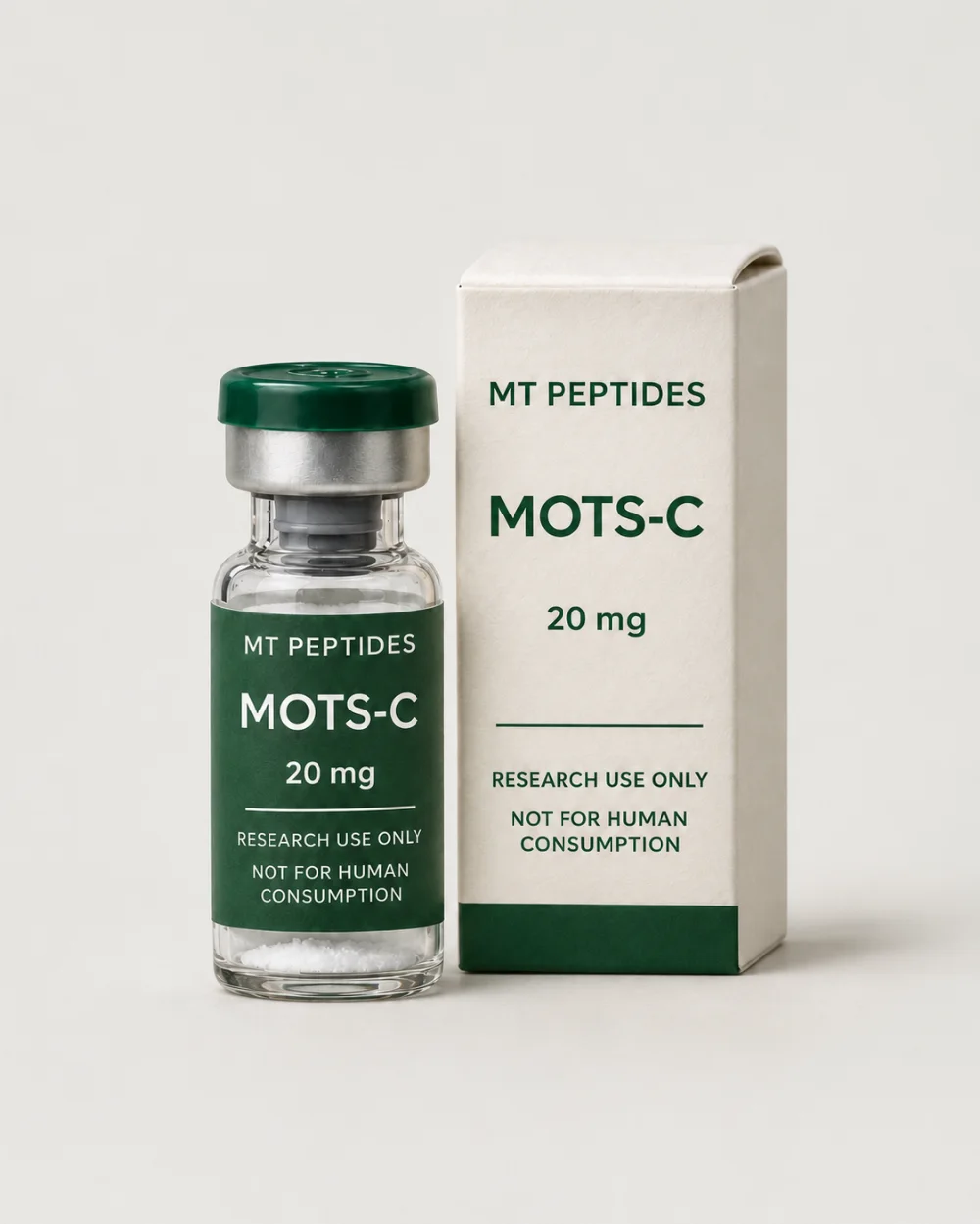
The 20 mg entry in the MT Peptides catalog is a nominal quantity option. It cannot establish cellular signaling or the properties of materials used in a study. Review the product code, identity description and available technical fields separately.
This guide focuses on two dated original sources, not a systematic review of all MOTS-c research. Read their models and methods alongside the findings. No dosing, administration, performance or anti-aging recommendation is provided. Research only; not for human consumption.