
What is the research context?
Retatrutide, also identified by the research code LY3437943, is a peptide studied in relation to GIP, GLP-1 and glucagon receptors. Triple agonist describes that receptor scope. The term alone does not establish the size of an outcome or its consistency across conditions.
Understanding a receptor mechanism and evaluating a clinical research result are separate tasks. Keep the molecular description, experimental model and measured outcome distinct when reading a source.
What do the selected publications address?
The 2022 paper by Coskun and colleagues addresses discovery and early clinical proof of concept. It is a starting point for understanding the research targets of the molecule, not an analytical document for an MT Peptides product.
The 2023 paper by Jastreboff and colleagues reports a randomized, placebo-controlled phase 2 study involving 338 adults over 48 weeks. Read that dated study within its own population, design and outcome definitions.
How can findings be kept in context?
Check the time point and comparison underlying a reported result. Change from baseline and difference from placebo are not identical definitions. The participant group and evaluation method behind the result should also remain visible.
Do not present a single percentage as an expected outcome for another study or a catalog product. Efficacy measures and safety evaluations address separate questions; a finding in one does not replace the other.
What do the 40 mg and 50 mg options mean?
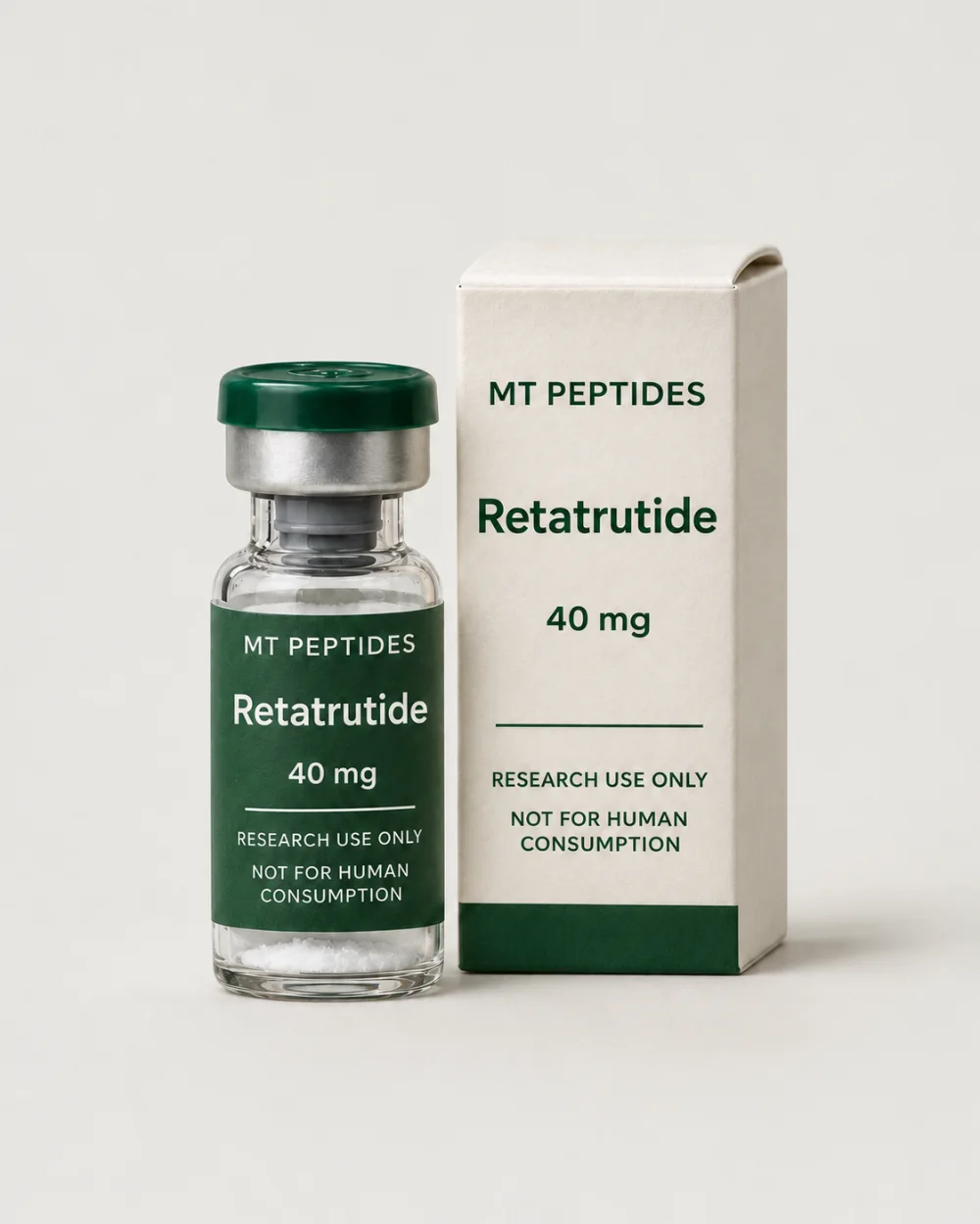
The 40 mg and 50 mg entries in the MT Peptides catalog are nominal quantity options. They are not the same information as a clinical study's intervention schedule. The selected quantity and product code identify the record concerned by an inquiry.
This guide explains two selected publications, not the entire literature or the latest development status. Research materials and catalog products cannot be substituted for one another. The record is for research only and is not intended for human consumption.